If you’ve been following the world of Bitcoin for a while, you know that scaling payments without giving up self-custody is one of the network’s biggest technical challenges. The Lightning Network solved a good part of this puzzle and popularized instant payments in sats, but it brought with it a set of pain points known to the community, such as the complexity of managing channels, the need for incoming liquidity and the increasing dependence on service providers to keep everything working.
This is exactly where the Ark Protocol comes in, a new proposal that wants to unlock cheap payments in Bitcoin without the end user even needing to know what a payment channel is.
In this guide you will understand what Ark is, why it was created, how it works behind the scenes with the famous VTXOs and the Operator figure, what the practical difference is to Lightning, what Ark Labs’ Arkade is that already runs on mainnet and how you can start using this technology today, even without being a developer.
Let’s go?!
index
What is Ark Protocol?
The Ark Protocol is a Bitcoin layer 2 designed to make off-chain payments in a scalable, instantaneous way and with extremely low costs, without requiring each user to manage payment channels individually.
The central idea is that you can receive, store and send bitcoin off chain within a shared structure, maintaining your self-custody, while the complexity of liquidity is in the hands of professional traders who take care of this part under the hood.
The protocol was originally designed by developer Burak in 2023 as an alternative to Lightning bottlenecks, and has since gained rapid traction in the ecosystem.
Ark Labs, founded by Marco Argentieri and supported by names like Tether, Tim Draper, Ego Death Capital and Anchorage Digital, is today the main company behind the practical implementation of the protocol, with an ambitious roadmap to transform Bitcoin into a programmable finance layer without needing a soft fork or external bridges.
For those who use Bitcoin on a daily basis, what is important to understand is that Ark is one of the first technologies that can deliver the Lightning experience, that is, instant and cheap payments, without the operational burden of channels, watchtowers, splicing, inbound liquidity management and channel state backup that scare both new users and developers.
Why was the Ark Protocol created?
To understand why Ark exists, it’s worth taking two steps back and honestly looking at Lightning’s limits. Lightning is one of the most brilliant technologies ever built on top of Bitcoin and revolutionized what was possible with sats payments, but it carries some assumptions that proved complicated in practice.
The main one is that each user, To use Lightning in your own custody, you need an open channel to receive payments and this channel requires liquidity on the other side, which means that someone needs to put bitcoin there for you to receive it.
This model works very well among professional nodes that move volume and do bidirectional trade, but it breaks down when the use case is the common consumer paying a merchant, because the flow is almost always unidirectional. The trader receives all the time and rarely sends, which unbalances the channel and forces constant liquidity management.
To solve this, Lightning Service Providers emerged, the famous LSPs, which alleviate some of the pain but add an intermediary that needs to be online all the time, which brings the custodial experience closer again.
Ark was born to attack exactly this problem. Instead of each user maintaining a personal channel with someone, users share a collective structure called a round, organized by a figure called an Operator, formerly known as ASP, who performs the function of coordinating liquidity behind the scenes.
The end user just needs to receive and send bitcoin naturally and the idea is that they don’t even know that there is an entire layer of engineering running back there.
How Ark works in practice
The centerpiece of Ark is the concept of VTXO, an acronym for Virtual Transaction Output, which is the off-chain version of a Bitcoin Common UTXO.
When you log into Ark, your balance is represented as one or more VTXOs within a shared transaction tree, anchored in a single on-chain output held by the Operator. This design is interesting because it allows hundreds or thousands of users to share a single output on the main blockchain, drastically reducing the cost of block space per user.
When you want to pay someone with Ark, what technically happens is a coordinated operation called a round. Several people who want to transact enter the same round, the Operator brings everything together in a single output tree and in a few seconds the payment is confirmed off chain for all participants simultaneously.
This batching is what makes Ark so efficient, as the on chain cost is diluted among all participants in the round, and the more people use the protocol, the lower the individual cost becomes.
The most important point of the design is that the Operator never takes possession of your bitcoin. It coordinates the tree and provides liquidity to anticipate payments, but all VTXO you have is redeemable unilaterally, that is, even if the Operator disappears, disappears from the map, goes offline or tries to block your funds, you can force your sats to go to a common Bitcoin on chain address without needing their cooperation. This unilateral exit property is what keeps Ark within the spirit of self-custody that defines Bitcoin.
Previously, VTXOs had an expiration date, which forced the user to periodically renew their balances so as not to lose the right to unilateral withdrawal. In July 2025, Ark Labs published an important evolution called Adios Expiry, which rethought the liveness and liquidity mechanism in order to remove this rigid expiration and make the experience even closer to a traditional wallet, without forced renewals for those who are using the system correctly.
Ark Protocol vs Lightning Network
Here is one of the questions that most arise when talking about Ark, so it’s worth explaining it calmly.
Lightning and Ark are not competing protocols in the sense that one cancels out the other, they solve similar problems through different paths and in practice are integrating, with Ark Labs building native bridges between the two worlds via its partnership with Boltz Exchange.
Lightning is a network of bilateral channels between nodes, in which each participant needs to open, maintain and eventually close channels to make routed payments. It works great when the user is supported by a robust wallet like Phoenix or an LSP, but the complexity is great for the common user.
Ark, on the other hand, dispenses with the concept of an individual channel in favor of a shared tree coordinated by the Operator, which radically simplifies the experience for the user and the wallet developer, as there is no channel to open, no capacity to calculate, no route to find.
See below for a direct comparison between the two technologies.
| Feature | Lightning Network | Ark Protocol |
|---|---|---|
| Model | Bilateral channels between nodes | Tree shared via Operator |
| Entry liquidity | Required via LSP or manual opening | Not required from the end user |
| Channel management | Splicing, watchtowers, state backup | There is no personal channel |
| Self custody | Yes, with unilateral close | Yes, with unilateral exit from VTXO |
| Offline receiving | Limited, requires online node | Possible via asynchronous VTXOs |
| On-chain cost per user | 1 transaction per open channel | Diluted in the round among several users |
| Maturity | Production since 2018 | Public beta on mainnet since 2025 |
| Ideal use case | Routed payments and professional nodes | Mass onboarding and edge users |
In other words, instead of competing, Ark and Lightning are complementing each other.
The Ark Labs team recently created Fulmine, a Bitcoin daemon designed for swap and payment hub operators, which combines Ark’s batched infrastructure with the Lightning Network through Boltz.
By August 2025 this integration had already processed over 1,300 payments and 0.2 BTC in volume during the Baltic Honeybadger in Riga, with users paying via Phoenix, Wallet of Satoshi and Aqua without even realizing that the backend was running on Ark.
What is Arkade, the flagship implementation of Ark
Arkade is the name of the main implementation of the Ark Protocol maintained by Ark Labs, launched in public beta in October 2025. It is described by the company itself as an operating system for programmable finance on top of Bitcoin, and the proposal goes well beyond just instant payments.
The idea is to deliver a complete infrastructure for developers to build wallets, payment gateways, lending products, native stablecoins and even trading, all with settlement in Bitcoin and without a soft fork in the base layer.
Arkade already comes with SDKs in TypeScript, Go and Rust to make the work easier for those who want to build wallets or services. It also has the official BTCPayServer plugin, which allows any merchant to start accepting payments via Ark with the same ease as accepting payments via Lightning.
Last year, Ark Labs also announced Arkade Assets, an extension that brings native support for stablecoins and other digital assets within the same model as UTXOs and VTXOs, without depending on external indexers or social consensus between projects.
In March 2026, the company announced a seed round of US$5.2 million with Tether in the lead, along with Ego Death Capital, Epoch VC, Lion26, Sats Ventures and Contribution Capital, in addition to the strategic investment from Anchorage Digital. The capital raised goes directly to accelerating Arkade as a global programmable infrastructure for fintechs, asset managers and brokerages that want to offer financial products with the security of Bitcoin without having to create their own custody.
Ark Integrations and Ecosystem
A protocol only becomes reality when the ecosystem adopts it, right? And regarding that, Ark has already arrived in 2026 with an interesting list of partners that are integrating or already running on top of the technology. Let’s go through the main ones.
Boltz Exchange is the project’s most strategic partner, providing the swaps infrastructure that connects Ark to the Lightning Network and sidechains like Liquid. It was this integration that allowed the Riga experiment where no user needed to change wallets to pay via Ark, because swaps happen transparently between networks.
BTCPayServer has an official plugin called ArkPayServer, maintained by Ark Labs CTO Mr. Kukks, which allows anyone running a BTCPay server to accept Ark payments immediately, with instant confirmation and reduced on-chain costs via batching. For those who accept Bitcoin in business, this is potentially a significant saving on fees and a huge improvement in the customer experience.
Wallets such as Breez, Bull Bitcoin, LayerZ Wallet and Lendasat have announced integration with Arkade and the expectation is that throughout 2026 more popular wallets will include native support for Ark, especially those focused on onboarding beginner users who suffer from Lightning’s learning curve.
Ark Labs itself has made available an open source reference wallet called Arkade Wallet to serve as a basis for others bitcoin developers and the Arkade Money app is now available for anyone who wants to try the technology in beta.
It is worth mentioning that Ark has also been in dialogue with the Taproot Assets universe, in a movement that explores taking tokens issued via Taproot Assets into Ark’s off-chain trees, paving the way for a unified model of payments and assets in Bitcoin without having to change the network’s consensus.
What changes in practice for those who use Bitcoin on a daily basis
If you are an ordinary user who just wants to buy bitcoin, store it safely and eventually pay for a VPN or a coffee without a headache, Ark’s impact will arrive quietly. The trend is for popular wallets to start offering instant receipts via Ark without you even needing to know what’s running behind it, in the same way that today you use Lightning in Wallet of Satoshi without needing to understand what HTLC or Onion Routing is.
For those who accept Bitcoin as a means of payment in a business, the advantage is more tangible and immediate. Ark eliminates the need to manage inbound liquidity, watchtowers, channel backup and splicing, three points that have always been a nightmare for those who just wanted to receive sats without becoming a network engineer. The trader simply receives a VTXO, and when he wants to move this balance to a cold wallet or for Lightning, it does this directly and quickly.
For developers and companies thinking about building products on top of Bitcoin, Arkade opens a huge door, because it solves once and for all the problem of offering a modern financial experience in sats without falling into the trap of holding customers’ balances. Lending, vaults, programmable accounts, payment gateways and yield products can be built with the same security as Bitcoin’s base layer and the speed that the modern user expects.
How to start using Ark Protocol today
For those who are users and just want to try the technology, the simplest way is to download the Arkade Wallet, which is the reference implementation maintained by Ark Labs. It is completely self-custodial, performs onboarding and off boarding via automatic swap with Lightning through Boltz and you can send payments to any Lightning invoice without running any node.
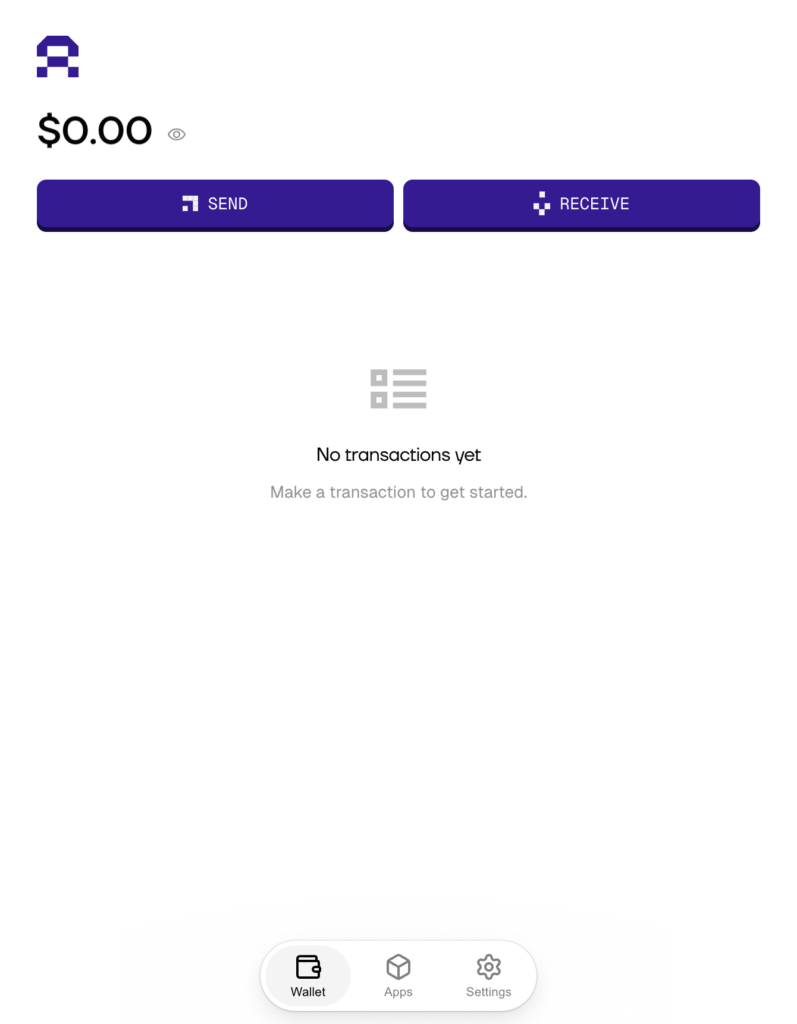
Remember that the software is still in public beta, so the official recommendation is not to place significant values for hodl and treat this as an educational experiment.
For those who are developers, the official documentation There are complete tutorials for integrating the protocol via the TypeScript SDK, Go SDK or Rust SDK, and the Ark Labs GitHub repository hosts all open source components, including Fulmine, the BTCPayServer plugin and the SDKs.
For those who are merchants and use BTCPayServer, simply install the ArkPayServer plugin on the server panel to start accepting Ark payments immediately. Configuration is simple and the improvement in the billing experience is usually noticed from the first transaction, especially compared to the average time of traditional on-chain confirmations.
What to expect from Ark Protocol in 2026 and beyond
Ark stopped being an academic concept and became infrastructure running in production. The next few months tend to be one of accelerated expansion. With the entry of Tether’s capital in March 2026, the expectation is that Arkade will become a relevant payments layer for stablecoins on top of Bitcoin, especially for emerging markets where the use of USDT is already massive but today depends almost entirely on alternative networks such as Tron and Ethereum.
Technically, the roadmap points to richer scripting environments within the protocol, expanded support for Taproot Assets, integration with more popular wallets, and continued improvements to the trust minimized delegation model that came with the Adios Expiry update.
In the medium term, if the BitcoinCore eventually activating covenants via a future BIP, Ark could become even more efficient, but it is important to highlight that the technology works today without depending on any changes in the base layer.
Looking at the bigger picture, Ark positions itself as one of the central pieces of a new phase of Bitcoin, in which the base layer remains conservative and ultra secure, Lightning continues to be the skeleton of payments routed between professional nodes, and Ark enters as the mass onboarding layer that finally delivers the simple experience that was missing so that anyone, anywhere in the world, could use bitcoin on a daily basis without needing to understand the engineering that runs underneath.
Bitcoin continues to evolve silently and Ark is further proof that there is still a lot of beautiful engineering being done to make this network reach more people without losing its essence.
I hope you enjoyed learning about Ark!
Until next time and opt out!
Share on your social networks:

Area Bitcoin is an educational Bitcoin school that aims to accelerate the financial and intellectual sovereignty of all individuals.

Did you like this article? Consider buying us a cup of coffee so that we can keep writing new content! ☕